
Japanese iris
Iris laevigata, family Iridaceae
In its own language: カキツバタ
A water-loving Japanese iris with violet-blue blooms and historic garden ties
Iris laevigata is a flowering plant native to Japan, often found in shallow ponds or marshy ground. Its flowers range from blue to purple or violet, sometimes with white markings, and it has been grown in Japanese gardens for centuries.
- Blooms in late April to May in Japan
- Featured in a Heian-period poem using its name’s syllables
- Emblem of both Aichi Prefecture and Chiryū City
- Grows naturally in shallow water or wet soil
- Depicted on National Treasure screens by Ogata Korin
What does Japanese iris look like?
This iris grows upright with slender leaves and showy flowers that open in spring. Blooms are typically violet, purple or blue, but some forms carry white petals marked with blue spots, or deep purple edged in white. It thrives in wet conditions, often rooted in shallow water.
Where does Japanese iris come from?
Iris laevigata is native to Japan, though it also occurs in parts of China. It belongs to the Limniris subgenus of irises and has been part of Japanese horticulture since at least the Heian period, with named varieties recorded by the late 1600s.
When and how Japanese iris blooms
It grows best in still, shallow water or very moist soil. Seeds may take weeks to over a year to sprout, even under ideal conditions. Some types bloom repeatedly in mild climates, making them suitable for temperate water gardens.
How Japanese iris is used
In Japan, it appears in temple gardens and public displays. The city of Chiryū and Aichi Prefecture both claim it as their emblem. Each spring, a festival at Muryojuji Temple draws large crowds to see its bloom.
Kinds of Japanese iris
Notable forms include 'washino-o', with white flowers and blue spots, and 'maikujaku', which has dark purple petals edged in white. The leaf-variegated 'Variegata' is recognised for garden performance in the UK.
What Japanese iris means
The plant inspired a famous poem in the Ise Monogatari, using the syllables ka-ki-tsu-ba-ta. Ogata Korin’s National Treasure screens at the Nezu Museum depict it, and they are shown each year when the irises bloom in the museum’s pond.
Where Japanese iris is used and seen
 The Daffodil FestivalPierce County’s spring parade and daffodil celebration since 1934
 GosekkuFive seasonal festivals once held at the Japanese imperial court
 Hakone Botanical Garden of WetlandsA garden of wetland and alpine plants in Hakone, Japan
 Parc floral de ParisA botanical garden and flower park in the Bois de Vincennes, Paris
 Parc Floral de la SourceA large public garden in Orléans built around the source of the Loiret river
 KeukenhofA vast Dutch flower garden famous for its spring tulip displays
 KanzashiTraditional Japanese hair ornaments, often crafted as folded silk flowers
 BouquetA creative arrangement of flowers, given or displayed for many occasions
Traditions that use it
Where to see Japanese iris


Questions people ask about Japanese iris
Where does Iris laevigata come from?
It is native to Japan, and also found in parts of China. It grows wild in shallow water or marshy areas.
When does the Japanese iris bloom?
In Japan, it flowers in late April and May. The Nezu Museum displays its famous iris screens during this time.
What is special about kakitsubata in Japanese culture?
It appears in classical poetry and art. A Heian-era poem uses its name’s syllables, and Ogata Korin painted it on National Treasure screens.
Is it used as a symbol anywhere?
Yes. It is the official flower of Aichi Prefecture and Chiryū City in Japan, where an annual festival celebrates its bloom.
How is it grown?
It prefers shallow water or very damp soil. Some varieties can bloom repeatedly in mild climates, and seeds may take months to germinate.
Good reading and sources
- Iris laevigata 'Variegata' (v)Royal Horticultural Society, Article
- USDA Plants DatabaseUS Department of Agriculture, Article
- Plants of the World OnlineRoyal Botanic Gardens, Kew, Plant database
- Where it has been recordedGBIF, Plant database
- Sightings and photos by naturalistsiNaturalist, Plant database
- Iris laevigata on WikipediaEncyclopedia
- More photos on Wikimedia CommonsPhotos
- Wikidata recordOpen data
The facts on this page come from the Wikipedia article "Iris laevigata", written by its contributors and used under the CC BY-SA 4.0 licence, and from its Wikidata record (CC0). Phool rewrote the text in its own words, with AI assistance, and compares every page with the article to make sure no passage is copied. It may be reused under the same CC BY-SA 4.0 licence with a link back.
It may contain mistakes. It is not medical or foraging advice: many flowers are poisonous, and traditional uses are reported, not recommended. If something is wrong, tell us. Last refreshed 2026-10-03.
Others in the family Iridaceae
The whole family Gladiolus
Tall, showy flower spikes grown from corms, known as sword lilies
Gladiolus · Garden flower
Gladiolus
Tall, showy flower spikes grown from corms, known as sword lilies
Gladiolus · Garden flower
 Iris
A large group of perennial flowers with striking, six-lobed blooms
Iris · Wildflower
Iris
A large group of perennial flowers with striking, six-lobed blooms
Iris · Wildflower
 Crocus
Small corm-grown flowers in white, yellow, orange or purple
🇹🇷 Turkey and 7 more · Wildflower
Crocus
Small corm-grown flowers in white, yellow, orange or purple
🇹🇷 Turkey and 7 more · Wildflower
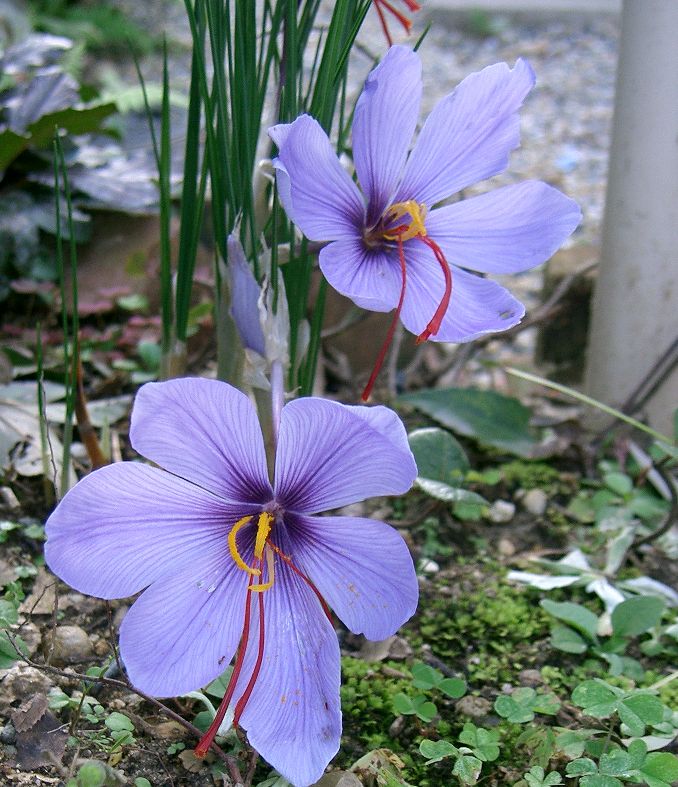 Saffron crocusCrocus sativus
The purple autumn flower whose red stigmas yield the spice saffron
🇨🇳 China and 1 more · Garden flower
Saffron crocusCrocus sativus
The purple autumn flower whose red stigmas yield the spice saffron
🇨🇳 China and 1 more · Garden flower
More from Japan
All the flowers of Japan PeachPrunus persica
A flowering fruit tree from China, grown for its pink blossoms and sweet fruit
🇨🇳 China and 7 more · Flowering tree
PeachPrunus persica
A flowering fruit tree from China, grown for its pink blossoms and sweet fruit
🇨🇳 China and 7 more · Flowering tree
 Chrysanthemum菊花
Autumn-blooming flower with thousands of varieties, cherished in East Asia and beyond
🇨🇳 China and 6 more · Wildflower
Chrysanthemum菊花
Autumn-blooming flower with thousands of varieties, cherished in East Asia and beyond
🇨🇳 China and 6 more · Wildflower
 Sacred lotusNelumbo nucifera
The pink aquatic flower sacred in Asia and grown for food, worship and beauty
🇮🇳 India and 7 more · Water flower
Sacred lotusNelumbo nucifera
The pink aquatic flower sacred in Asia and grown for food, worship and beauty
🇮🇳 India and 7 more · Water flower
 Wild cherryPrunus avium
A tall flowering tree native to Europe, grown for its sweet fruit and spring blossom
🇮🇹 Italy and 6 more · Flowering tree
Wild cherryPrunus avium
A tall flowering tree native to Europe, grown for its sweet fruit and spring blossom
🇮🇹 Italy and 6 more · Flowering tree