🇵🇭 The flowers of the Philippines
57 pages from the Philippines: its flowers, the things made with them and the places to see them, across 14 cities and regions.
The Philippines is home to over 9,250 native vascular plant species, with about a third found nowhere else. Its tropical rainforests once teemed with unique palms, orchids, and dipterocarps. The country is especially known for its endemic palms, diverse orchids, and the rare Rafflesia flower.
- About one-third of native plant species are endemic.
- Two-thirds of Philippine palm species grow nowhere else.
- Over 137 orchid genera and 998 species are recorded.
- Several Rafflesia species, including R. philippensis, occur here.
- Dipterocarp trees once dominated lowland rainforests.
The plant life of the Philippines
The Philippine archipelago, set within the Malesian biogeographical region, supports a remarkably rich plant life. Its tropical climate and geographic isolation have fostered high diversity and endemism among flowering plants. Rainforests, though much reduced, once covered broad lowlands and hills, dominated by large dipterocarp trees. Palms, orchids, gingers, begonias, and pandans are especially varied, with many species unique to the islands. The flora reflects both Southeast Asian connections and local evolution, making the country a center of plant diversity.
From region to region in the Philippines
Flora varies across the islands: lowland and hill rainforests, formerly widespread, featured dipterocarps and giant figs. Coastal areas support mangroves like Rhizophora and Sonneratia. Upland and mountain regions host unique palms, pitcher plants, and orchids. Geographic isolation by sea and deep trenches has helped shape distinct plant communities on different islands.
Flowers to know in the Philippines
The Philippines is famous for its endemic palms—about two-thirds of its 150 species are found only here. Orchids are another highlight, with over 137 genera and nearly a thousand species recorded. The giant Rafflesia, including Rafflesia philippensis, stands out for its size and rarity. Dipterocarps, once dominant in forests, and the Narra tree (Pterocarpus indicus), valued for timber, are also significant.
Threats and protection in the Philippines
Much of the original rainforest has been lost, threatening many native species. Conservation efforts focus on documenting and protecting the remaining unique flora. Ongoing environmental changes make the discovery of new species urgent for scientific records and future preservation.
The facts in this overview come from the Wikipedia article "Flora of the Philippines", written by its contributors and used under the CC BY-SA 4.0 licence. Phool rewrote the text in its own words, with AI assistance, and compares every page with the article to make sure no passage is copied. It may be reused under the same CC BY-SA 4.0 licence with a link back.
Flower experiences in the Philippines

Cities and regions of the Philippines
 JasmineJasminum
A group of fragrant shrubs and vines with white or yellow star-shaped flowers
🇵🇰 Pakistan and 7 more · Wildflower
JasmineJasminum
A group of fragrant shrubs and vines with white or yellow star-shaped flowers
🇵🇰 Pakistan and 7 more · Wildflower
 WaterlilyNymphaea
Floating aquatic flowers found in ponds and lakes worldwide
🇪🇬 Egypt and 7 more · Water flower
WaterlilyNymphaea
Floating aquatic flowers found in ponds and lakes worldwide
🇪🇬 Egypt and 7 more · Water flower
 AchioteBixa orellana
Shrub with spiky red pods, source of the natural dye annatto
🇧🇷 Brazil and 9 more · Flowering shrub
AchioteBixa orellana
Shrub with spiky red pods, source of the natural dye annatto
🇧🇷 Brazil and 9 more · Flowering shrub
 Waling-walingVanda sanderiana
A rare orchid known as the 'Queen of Philippine flowers'
🇵🇭 Philippines · Orchid
Waling-walingVanda sanderiana
A rare orchid known as the 'Queen of Philippine flowers'
🇵🇭 Philippines · Orchid
 Showy medinillaMedinilla magnifica
A tropical epiphyte with large pink flower clusters from the Philippines
🇵🇭 Philippines · Wildflower
Showy medinillaMedinilla magnifica
A tropical epiphyte with large pink flower clusters from the Philippines
🇵🇭 Philippines · Wildflower
 Jade vineStrongylodon macrobotrys
A tropical vine with long clusters of turquoise claw-shaped flowers from the Philippines
🇵🇭 Philippines · Climber
Jade vineStrongylodon macrobotrys
A tropical vine with long clusters of turquoise claw-shaped flowers from the Philippines
🇵🇭 Philippines · Climber
 Rafflesia
The giant parasitic flower that smells of rotting flesh
🇲🇾 Malaysia and 5 more · Wildflower
Rafflesia
The giant parasitic flower that smells of rotting flesh
🇲🇾 Malaysia and 5 more · Wildflower
 Rafflesia arnoldii
The world’s largest single flower, famous for its strong scent of decay
🇮🇩 Indonesia and 3 more · Wildflower
Rafflesia arnoldii
The world’s largest single flower, famous for its strong scent of decay
🇮🇩 Indonesia and 3 more · Wildflower
 Phalaenopsis sanderiana
A pendant-growing orchid native to the Philippines with showy flower clusters
🇵🇭 Philippines · Wildflower
Fowlie's PaphiopedilumPaphiopedilum fowliei
A rare slipper orchid found only in Palawan’s moist lowland forests
🇵🇭 Philippines · Wildflower
Phalaenopsis sanderiana
A pendant-growing orchid native to the Philippines with showy flower clusters
🇵🇭 Philippines · Wildflower
Fowlie's PaphiopedilumPaphiopedilum fowliei
A rare slipper orchid found only in Palawan’s moist lowland forests
🇵🇭 Philippines · Wildflower
 NarraPterocarpus indicus
Tall tropical tree with yellow flowers and prized rose-scented wood
🇵🇭 Philippines and 7 more · Flowering tree
NarraPterocarpus indicus
Tall tropical tree with yellow flowers and prized rose-scented wood
🇵🇭 Philippines and 7 more · Flowering tree
 Unscented dendrobiumDendrobium anosmum
A Southeast Asian orchid with large purple, raspberry-scented flowers
🇵🇭 Philippines and 3 more · Wildflower
Unscented dendrobiumDendrobium anosmum
A Southeast Asian orchid with large purple, raspberry-scented flowers
🇵🇭 Philippines and 3 more · Wildflower
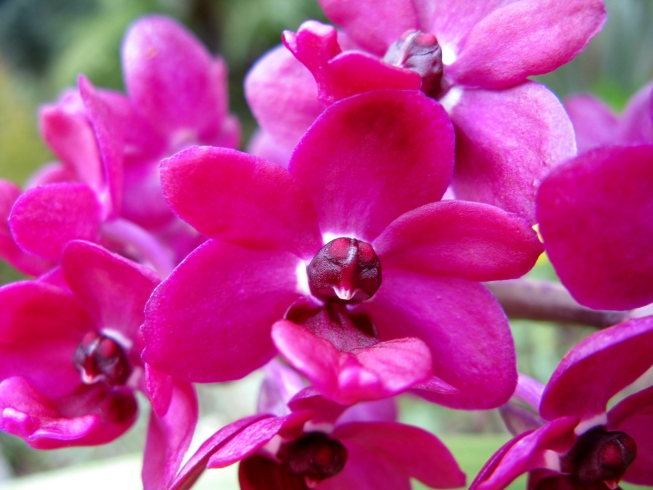 Rhynchostylis giganteaকপৌফুল
A fragrant orchid with dense, foxtail-like flower spikes from Southeast Asia
🇵🇭 Philippines and 7 more · Wildflower
Rhynchostylis giganteaকপৌফুল
A fragrant orchid with dense, foxtail-like flower spikes from Southeast Asia
🇵🇭 Philippines and 7 more · Wildflower
 Desert roseAdenium
A succulent with thick stems and bright flowers, grown as a bonsai and houseplant
🇳🇦 Namibia and 7 more · Wildflower
Desert roseAdenium
A succulent with thick stems and bright flowers, grown as a bonsai and houseplant
🇳🇦 Namibia and 7 more · Wildflower
 Mesua
Evergreen shrubs and small trees from tropical southern and southeast Asia
🇮🇳 India and 4 more · Flowering tree
Mesua
Evergreen shrubs and small trees from tropical southern and southeast Asia
🇮🇳 India and 4 more · Flowering tree
 Tricyrtis
A shade-loving Asian perennial with spotted, trumpet-shaped flowers
🇨🇳 China and 3 more · Wildflower
Tricyrtis
A shade-loving Asian perennial with spotted, trumpet-shaped flowers
🇨🇳 China and 3 more · Wildflower
 Bayur treePterospermum acerifolium
A tall Southeast Asian tree with large fragrant white flowers and dinner-plate leaves
🇲🇲 Myanmar and 2 more · Flowering tree
Bayur treePterospermum acerifolium
A tall Southeast Asian tree with large fragrant white flowers and dinner-plate leaves
🇲🇲 Myanmar and 2 more · Flowering tree
 Orange jasmineMurraya paniculata
A fragrant shrub or small tree with white flowers and orange-red berries
🇨🇳 China and 7 more · Wildflower
Orange jasmineMurraya paniculata
A fragrant shrub or small tree with white flowers and orange-red berries
🇨🇳 China and 7 more · Wildflower
 Ceylon ironwoodMesua ferrea
A slow-growing tree with drooping red leaves and large white scented blooms
🇱🇰 Sri Lanka and 6 more · Flowering tree
Ceylon ironwoodMesua ferrea
A slow-growing tree with drooping red leaves and large white scented blooms
🇱🇰 Sri Lanka and 6 more · Flowering tree
 Hairy Water LilyNymphaea pubescens
A night-blooming water lily with softly hairy leaves and large pink or white flowers
🇧🇩 Bangladesh and 7 more · Water flower
Hairy Water LilyNymphaea pubescens
A night-blooming water lily with softly hairy leaves and large pink or white flowers
🇧🇩 Bangladesh and 7 more · Water flower
 BlueminkAgeratum houstonianum
A fluffy blue annual often grown in garden borders and balcony boxes
🇬🇹 Guatemala and 7 more · Wildflower
BlueminkAgeratum houstonianum
A fluffy blue annual often grown in garden borders and balcony boxes
🇬🇹 Guatemala and 7 more · Wildflower
 Pride of IndiaLagerstroemia speciosa
A tree with showy pink to purple flowers, grown across South and Southeast Asia
🇮🇳 India and 6 more · Flowering tree
Pride of IndiaLagerstroemia speciosa
A tree with showy pink to purple flowers, grown across South and Southeast Asia
🇮🇳 India and 6 more · Flowering tree
 Vandaवन्दाका
A tropical orchid genus prized for its vivid, long-lasting flowers
🇮🇳 India and 5 more · Wildflower
Vandaवन्दाका
A tropical orchid genus prized for its vivid, long-lasting flowers
🇮🇳 India and 5 more · Wildflower
 Fragrant screw-pinePandanus odorifer
A small tropical tree with sweet-scented flowers used for perfume and rituals
🇮🇳 India and 4 more · Flowering tree
Fragrant screw-pinePandanus odorifer
A small tropical tree with sweet-scented flowers used for perfume and rituals
🇮🇳 India and 4 more · Flowering tree
 ThumbaiLeucas aspera
A small white-flowered weed of Indian fields, used in food and medicine
🇮🇳 India and 2 more · Herb or useful flower
ThumbaiLeucas aspera
A small white-flowered weed of Indian fields, used in food and medicine
🇮🇳 India and 2 more · Herb or useful flower
 TriggerplantStylidium
Australian wildflowers with a spring-loaded pollination column
🇦🇺 Australia and 4 more · Wildflower
TriggerplantStylidium
Australian wildflowers with a spring-loaded pollination column
🇦🇺 Australia and 4 more · Wildflower
 Dendrobium
A vast genus of orchids found from the Himalayas to Australia and the Pacific
🇦🇺 Australia and 7 more · Wildflower
Dendrobium
A vast genus of orchids found from the Himalayas to Australia and the Pacific
🇦🇺 Australia and 7 more · Wildflower
 Vireya rhododendronRhododendron sect. Vireya
Tropical rhododendrons of Southeast Asia and the Pacific islands
🇹🇭 Thailand and 5 more · Tropical flower
Vireya rhododendronRhododendron sect. Vireya
Tropical rhododendrons of Southeast Asia and the Pacific islands
🇹🇭 Thailand and 5 more · Tropical flower
 Pigeon orchidDendrobium crumenatum
A white, fragrant orchid that blooms all at once after rain
🇮🇳 India and 5 more · Wildflower
Pigeon orchidDendrobium crumenatum
A white, fragrant orchid that blooms all at once after rain
🇮🇳 India and 5 more · Wildflower
 Grammatophyllum
A group of rainforest orchids with striking green and purple-marked blooms
🇮🇩 Indonesia and 4 more · Wildflower
Grammatophyllum
A group of rainforest orchids with striking green and purple-marked blooms
🇮🇩 Indonesia and 4 more · Wildflower
Photo credits on this page
The small pictures above come from Wikimedia Commons under free licences. Some are cropped to fit.
- Jasmine: HelenOnline, CC BY-SA 3.0, source
- Waling-waling: Orchi, CC BY-SA 3.0, source
- Waterlily: Ragesoss, CC BY-SA 3.0, source
- Achiote: Primejyothi, CC BY-SA 3.0, source
- Pigeon orchid: Marshman at English Wikipedia / Eric Guinther, CC BY-SA 3.0, source
- Grammatophyllum: Walter Hood Fitch (1817-1892) del. et lith. Description by William Jac, Public domain, source
- Showy medinilla: No machine-readable author provided. Alberto Salguero assumed (based o, CC BY-SA 3.0, source
- Jade vine: andrewholle, CC0, source
- Rafflesia: Maizal, CC BY-SA 4.0, source
- Rafflesia arnoldii: LukeTriton, CC BY-SA 4.0, source
- Phalaenopsis sanderiana: Orchi, CC BY-SA 3.0, source
- Narra: Ping an Chang, CC BY-SA 4.0, source
- Unscented dendrobium: sunoochi, CC BY 2.0, source
- Rhynchostylis gigantea: Lars.Kurth, Public domain, source
- Tricyrtis: André Karwath aka Aka, CC BY-SA 2.5, source
- Desert rose: Xocolatl, CC BY-SA 4.0, source
- Mesua: Scott Zona, CC BY 2.0, source
- Bayur tree: J.M.Garg, CC BY 3.0, source
- Orange jasmine: Forest & Kim Starr, CC BY 3.0, source
- Ceylon ironwood: Anand Osuri, CC BY-SA 4.0, source
- Hairy Water Lily: Bernard Loison, CC BY-SA 2.5, source
- Bluemink: Harry Alverson, CC BY-SA 2.0, source
- Pride of India: The original uploader was Lokenrc at English Wikipedia ., CC BY 2.5, source
- Panagbenga Festival: lolay, CC BY 2.0, source
- Vanda: The original uploader was Lithiumscream at English Wikipedia ., Attribution, source
- Fragrant screw-pine: Wibowo Djatmiko ( Wie146 ), CC BY-SA 3.0, source
- Dendrobium: Geoff Derrin, CC BY-SA 4.0, source
- Thumbai: J.M.Garg, CC BY-SA 4.0, source
- Triggerplant: Mick Stanic, CC BY 2.0, source
- Vireya rhododendron: Ben Cody, Public domain, source
- Philippines: Vyacheslav Argenberg, CC BY 4.0, source